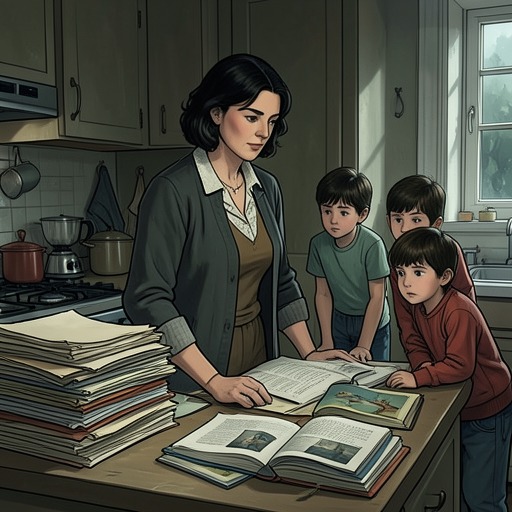
Event 1
Meeting on the Mekong Ferry

[Meeting on the Mekong Ferry](entity:event-recall-event-b6cf11378972) is the decisive threshold scene of the Narrator’s early life. At fifteen and a half, traveling from [Sadec](entity:location-recall-location-8b3761b44c9f) to Saigon, she encounters [The Lover from Cholon](entity:character-recall-character-376a7c365425) beside a black [Morris Léon-Bollée limousine](entity:object-recall-object-morris-l-on-boll-e-lim-8f47556a4840) on a ferry crossing a branch of the Mekong between [Vinh Long](entity:location-recall-location-3c53f104f710) and Sadec. Their exchange begins an affair that will last a year and a half, expose the pressures of colonial race and class, separate her from her family, and remain emotionally active decades later when he phones her in [Paris](entity:location-recall-location-657453741ed3).
## Setting and Circumstances
The encounter occurs at the end of a school vacation, while the Narrator is returning from the house provided for her mother’s work in Sadec to her boarding school in Saigon. She is fifteen and a half and travels on a native bus, seated near the driver in the section reserved for white passengers. Her mother has placed her in the driver’s care against the dangers of travel, including accidents, fire, assault, piracy, and a fatal mishap on the ferry. The journey therefore begins within a structure of supervision and colonial privilege, but the ferry interrupts that protection.
The crossing is on the Mekong in the great plain of mud and rice in southern Cochin [China](entity:location-recall-location-134e6ca3a450), on the route between Vinh Long and Sadec. The Narrator repeatedly gets off the bus at the ferry, even at night, because she fears that the cables may break and the current may sweep the passengers out to sea. She experiences the river as a force capable of carrying away rocks, a cathedral, or a city. That threatening current makes the ferry more than a transport stop: it is a space of exposure in which the ordinary arrangements of school, family, and racial separation can suddenly be breached.
She is dressed in a man’s fedora with a black ribbon, gold lamé high heels, a threadbare silk dress, dark red lipstick, and make-up that includes Crème Tokalon and Houbigant powder. The clothes make her conspicuous. White women and even white girls are watched in the colonies, and the Narrator has already become accustomed to the gaze of white men. The contrast between her poverty, her carefully assembled appearance, and the privileged vehicle beside the bus creates the visual conditions of the meeting before either participant speaks.
## The Encounter beside the Limousine
Beside the bus stands a large black limousine with a chauffeur in white cotton livery. The vehicle is identified as a Morris Léon-Bollée limousine, a funereal-looking car whose size and enclosed luxury contrast with the crowded native bus. Inside it sits an elegant man in European clothing, wearing the light tussore suit associated with Saigon bankers. He is not white, and his attention to the white girl is charged by the colonial racial hierarchy that governs both of them.
The man gets out, smokes an English cigarette, and approaches slowly. He is visibly nervous and first offers the Narrator a cigarette. She refuses without telling him to leave. He says that he must be dreaming and wonders where she has come from. She identifies herself as the daughter of the headmistress of the girls’ school in Sadec, which leads him to recognize her mother and to mention the family’s bad luck with the land purchased in [Cambodia](entity:location-recall-location-ae043f2b83d5). His remarks establish that he already knows something of her family’s precarious social position.
He comments on the hat, calling it original and saying that a girl so pretty can do anything she likes. The compliment is inseparable from his perception of her as an unusually visible figure: a white girl on a native bus, alone at the ferry, dressed in a man’s hat and gold shoes. She asks who he is. He explains that he has just returned from Paris, that he lives in Sadec in the large house with terraces and blue-tiled balustrades, and that he is Chinese, with a family from North China and [Fushun](entity:location-recall-location-17eb66fb08c5). He then offers to drive her to Saigon and orders the chauffeur to transfer her luggage from the bus to the black car.
## The Threshold and Its Immediate Shift
The Narrator accepts the ride, and the car door closes. At that instant a barely perceptible distress, weariness, dimness, and fog seize her. The physical movement from bus to limousine becomes a social and psychological movement as well. She understands that she will never again travel in a native bus; she will have a limousine to the high school and boarding school, dine in the most elegant places in town, and carry regret for the bus, its driver, the women chewing betel, the children on the luggage racks, and the family in Sadec.
The change is not presented as simple advancement. Luxury arrives together with loss. The limousine gives her access to the man’s wealth and to a different urban world, but it also removes her from familiar routines and makes the old life irrecoverable. The Narrator understands in the car that her mother and brothers will no longer know what becomes of her. If she is taken away, wounded, or spoiled, they will not know. She is excluded from the family for the first time and forever, and from then on she must reckon with The Lover from Cholon as the first person who has introduced her to this new condition.
The scene’s decisive reversal lies in the man’s apparent social power and his emotional vulnerability. He possesses the car, money, and mobility, while she comes from a poor white family traveling by native bus. Yet she recognizes that he is afraid because of the difference of race, and she understands that he is already at her mercy. The crossing thus redistributes power without abolishing the structures that created the danger. He is a wealthy Chinese man constrained by racial taboo; she is a white colonial girl constrained by poverty, age, gender, and family authority.
## From Ferry Meeting to Affair
The ferry encounter immediately becomes a repeated pattern. The man comes every day to collect her from the high school and drive her back to the boarding school. On a Thursday afternoon, the weekly half-holiday, he comes to the boarding school and takes her away in the black car. Their destination is a modern, hastily furnished studio in [Cholon](entity:location-recall-location-9bafb013db9d), opposite the boulevards connecting the Chinese part of the city with central Saigon.
The Cholon apartment repeats the ferry’s threshold logic in a more intimate form. The room is dark, its shutters closed, and the loud city presses through windows without panes, blinds, and slats. Crowds pass outside; wooden clogs and shouted Chinese voices become an almost deafening soundscape. The bed is separated from the city only by shutters and cotton, so the lovers remain physically close to an urban public world that does not know their existence. Their private relationship is therefore enclosed but never fully sealed off from colonial society.
The man tells her softly that he loves her, while she remains silent. She understands that he cannot understand her and that he lacks the power to catch up with the perversity she already recognizes in herself. She realizes that she had been attracted to him on the ferry and that the attraction depended on her alone. Later she acknowledges that she desires him through his money as well as through the man himself: when she first saw him, he was already inside his car and his wealth. The meeting therefore binds desire to class, racial difference, and material escape from the family’s poverty.
Their affair lasts a year and a half. They avoid speaking about themselves or about a shared future because they know from the beginning that they cannot have one. Instead, they talk about daily matters, including Paris and his father’s wealth. In Chinese restaurants occupying entire buildings, they sit on the quieter European floor while the noise of waiters, kitchens, orchestras, fans, and draperies marks the city’s stratified spaces. The Lover from Cholon explains that his father’s fortune began with three hundred cheap semidetached native dwellings in Cholon, later expanding to streets, apartment blocks, and building land. His account of covered balconies and the habits of working-class residents connects the lovers’ private relation to the built environment and property system that sustain his family’s wealth.
## Consequences and Continuing Meaning
The ferry meeting sets in motion a separation from the family that later becomes literal. The Narrator’s departures from the boarding school are noticed; on one night, The Lover from Cholon drives her back in the black limousine and stops short of the entrance so that no one will see him. She runs inside without looking back and encounters Hélène Lagonelle, who asks where she has been. The secrecy of the ferry has become a routine of concealment, surveillance, and risk within the school.
The relationship cannot survive the social order that has permitted its beginning but forbids its completion. The Lover from Cholon’s father refuses to allow his son to marry the little white whore from Sadec. When the Narrator’s departure for [France](entity:location-recall-location-4f282e1af8a7) approaches, The Lover from Cholon’s body loses its sexual potency. He says that he is dead, while his gentleness remains intact. They decide to stop seeing one another but cannot do so; he continues to wait outside the high school in the black car, his head turned away in humiliation.
At the port, the departure repeats the ferry scene on a larger scale. When the ship is due to sail, its siren sounds three long blasts across the town; tugs draw it into the river, and the vessel gives a second farewell before moving toward the sea. The Narrator weeps without allowing her mother or younger brother to see, because he is Chinese and she is not supposed to grieve for such a lover. The black car stands apart from the [Messageries Maritimes](entity:organization-recall-organization-messageries-mari-097c7be6c9a5) car park, and she recognizes The Lover from Cholon inside it. As at the ferry, she leans on the rails while he watches from a distance.
Years after the war, after marriages, children, divorces, and books, The Lover from Cholon comes to Paris with his wife and phones the Narrator. He says that he only wanted to hear her voice, then tells her that he has continued to love her and will love her until death. The telephone call confirms that the ferry meeting was not merely the beginning of an adolescent affair. It has become the enduring image through which the Narrator understands desire, exclusion, colonial difference, and the strange persistence of an event whose photograph was never taken.
## Narrative Significance
The event is narrated as a recollection whose image lasts across the river and across decades. The Narrator insists on the exact age of fifteen and a half and returns repeatedly to the ferry, the rails, the river, the black car, the hat, and the gaze between the girl and the man. The scene is both precise and unstable: it is remembered, rearranged, and interpreted by the adult writer who knows what the crossing will produce even though no one present can yet know its importance.
[The absent photograph](entity:concept-recall-concept-the-absent-photograph-e1e842d9c252) becomes central to the event’s meaning. No one recognizes the crossing as a moment important enough to record, and therefore the image is never detached from ordinary life by a camera. Its power comes from that failure of creation. The ferry meeting survives not as documentary proof but as a self-created absolute, renewed through writing and through the later telephone call from Paris. The crossing changes the Narrator’s life because it happens once; it becomes literature because memory keeps crossing it again.
Event 2
The Mother’s Purchase and Failed Development of Land by the Dike
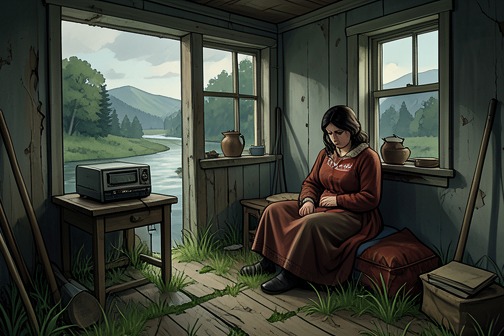
[The Mother’s Purchase and Failed Development of Land by the Dike](entity:event-recall-event-d1086cba8551) is the decisive material failure around which the family’s colonial life deteriorates. The mother invests in land that cannot be made productive, loses the lower part of the property, and continues returning to the abandoned bungalow even after the venture has effectively ended. Its failure does more than impoverish the family: it turns the landscape into a permanent reminder of hope defeated, while forcing the children into improvised futures and helping make departure from [Indochina](entity:location-recall-location-18b7d4135413) appear both necessary and irreparable.
## Purchase and Family Circumstances
The purchase takes place while the Elder Brother is away in [France](entity:location-recall-location-4f282e1af8a7) studying at a technical school. His departure has already served a grim family purpose: the mother needed to remove him from the other two children, and for several years he was no longer part of the household. With him absent, the mother buys the land by the dike, committing the family to a project whose consequences will dominate the lives of the children who remain. The Narrator describes the enterprise as a terrible business, though the Elder Brother’s absence makes it seem less terrible than his presence would have been. The property is therefore bound from the beginning to both economic hope and family danger.
The mother’s larger response to poverty is to plan relentlessly. When she can no longer imagine grand futures for her sons, she devises makeshift ones that will at least occupy the time ahead. Her younger son is repeatedly enrolled in the [Universal Correspondence School](entity:organization-recall-organization-universal-corres-edb871e9f964) for bookkeeping, but each course lasts only a few days before the family moves again and begins anew. After ten years the effort has achieved little; he becomes an accountant’s clerk in Saigon. The land purchase belongs to the same pattern of determined improvisation: the mother tries to convert precarious colonial circumstances into security, but the structures around the family offer no dependable route to prosperity.
## Failure of the Land
The property is not simply unprofitable; it becomes a wilderness. The Narrator sees wildernesses and wastes around the mother, in the sons who seem destined to achieve nothing, and in the salt land where the money has been lost for good. The lower part of the land is eventually abandoned altogether. Servants cultivate the higher patches, keep the paddy for themselves, and remain without wages, using the stout straw huts the mother built. Their continued labor preserves a remnant of life on the property, but it also confirms that the original development has failed: the land sustains those who work it rather than the family that purchased it.
The failed development acquires the character of slow, cumulative violence rather than a single spectacular disaster. The family’s investment disappears into land that cannot be controlled, while poverty, movement, and emotional exhaustion gradually close around them. The mother does not immediately accept the loss. Even after there is nothing left for her to do, she continues making the journey to the dike with the Narrator and the Younger Brother. They spend several days on the veranda of the bungalow facing the mountains of [Siam](entity:location-recall-location-67f95bb36606), then return home. Repetition becomes the form taken by defeat: the family revisits the site because abandoning it emotionally is harder than admitting that it has already been abandoned economically.
## The Bungalow and Repeated Return
By the time of the ferry encounter with the Lover from [Cholon](entity:location-recall-location-9bafb013db9d), the mother has not yet given up the land. The children have grown too old for the activities that once connected them to the place. They no longer bathe in the river, hunt [black panther](entity:creature-recall-creature-black-panther-88b054f9eeec) in the marshes of the estuary, enter the forest, or visit the villages in the pepper plantations. The landscape remains, but childhood has withdrawn from it. The family sits watching the forest, waiting and weeping, overtaken by the same sluggishness that has overtaken the mother.
The bungalow survives in a state between habitation and ruin. Cheap crockery remains inside. The roof, rotted by endless rain, continues to disintegrate, while the furniture is kept polished. The building’s outline is still clearly visible from the road, and its doors are opened each day to let the wind dry the wood before being shut at night against stray dogs and smugglers from the mountains. These acts of maintenance preserve the shape of a home after its economic purpose has vanished. The servants care for the bungalow as though the family were members of their own household, creating a fragile continuity that contrasts with the mother’s failed ownership and the children’s estrangement from the place.
## Relation to the Ferry Encounter and Departure
The land’s failure also corrects the Narrator’s earlier account of how she met the rich Chinese man in the black limousine. She had written that the meeting occurred in a bar at Réam, but later places it after the family had left the land by the dike, two or three years afterward, on the ferry crossing a branch of the Mekong between [Vinh Long](entity:location-recall-location-3c53f104f710) and [Sadec](entity:location-recall-location-8b3761b44c9f). The correction is important because it separates the encounter from the property’s physical setting while preserving the land as its economic and emotional background. The ferry becomes the threshold from one condition to another: the girl is leaving the old family world, yet the failed land remains the unseen pressure behind her attention to money and escape.
The Narrator’s response to the limousine is inseparable from the family’s financial ruin. She enters the car and experiences distress as the light over the river dims. She imagines that from then on she will no longer travel by native bus, but will be taken to high school and back to the boarding school in a limousine and dine in elegant places. At the same time, she anticipates regret for the bus, its driver, the women chewing betel, the children on the luggage racks, and the family in Sadec. The new access promised by wealth is therefore accompanied by an immediate awareness of what it will displace.
The affair that follows is conducted in the shadow of that economic calculation. In the Cholon flat, the Narrator acknowledges that she desires the Lover from Cholon through his money because she first encountered him already enclosed within his car and wealth. His family fortune comes from three hundred cheap semidetached compartments in Cholon, along with streets and building land; this colonial property system stands in stark contrast to the mother’s failed attempt to develop land by the dike. The Lover’s father can profit from urban housing for working-class residents, while the mother’s rural investment is lost. The contrast makes money spatial: one fortune is built by controlling crowded city dwellings, the other is consumed by an unproductive landscape.
## Consequences and Final Abandonment
The affair lasts a year and a half, but the Narrator and the Lover from Cholon never discuss a shared future because they know from the beginning that none is possible. The family’s need for money gives the relationship one practical direction, while racial and social barriers prevent it from becoming a recognized union. The Lover drives her back to the boarding school at night and stops short of the entrance so that no one will see him. She returns to the school and to Hélène Lagonelle, whose worried presence recalls the institutional and racial order surrounding the two white girls among mostly abandoned mixed-race pupils. The family’s economic crisis thus intersects with the wider colonial hierarchy that regulates visibility, intimacy, and belonging.
The land is finally relinquished not long before the family returns to France. About a year and a half after the ferry meeting, the mother sells the furniture and goes once more to the dike. She sits on the veranda facing the setting sun and looks toward Siam for the last time. Even when she later changes her mind, returns to Indochina, and retires to Saigon, she never again visits that mountain or sees the green and yellow sky above the forest. The final visit converts the failed property into a place of farewell: the mother can leave it physically only after giving herself one last view of the world she had tried, and failed, to make habitable.
The family’s departure does not end the mother’s effort to provide for her children. In later life she opens the [Nouvelle Ecole Française](entity:organization-recall-organization-nouvelle-ecole-f-ec2534068fcc), a French-language school that earns enough to help the Narrator with her studies and support the Elder Brother for as long as she lives. This later enterprise repeats the logic of the land purchase but alters its scale and outcome. Once again the mother seeks to turn labor into a future, yet the school succeeds where the land did not. The failed property remains the foundational wound behind that persistence, a ruined investment whose consequences continue through education, migration, family separation, and memory.
Event 3
The Family’s Departure from Indochina for France
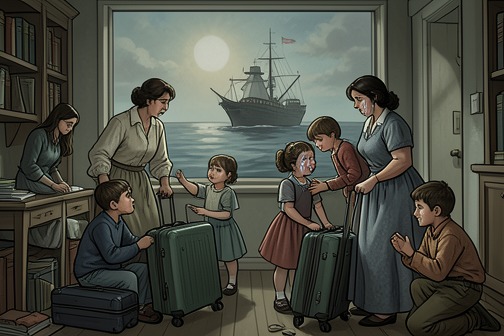
[The Family’s Departure from Indochina for France](entity:event-recall-event-250ceda01494) is both a physical voyage and the central threshold of the narrator’s formation. After the failure of the mother’s land by the dike and the death of the younger brother, the family leaves the colonial landscape for [France](entity:location-recall-location-4f282e1af8a7). The departure ends the household’s already damaged existence in [Indochina](entity:location-recall-location-18b7d4135413), separates the narrator from the Chinese lover from [Cholon](entity:location-recall-location-9bafb013db9d), and begins the long transformation by which the girl who crossed the Mekong becomes the woman who writes about that crossing, the family, and the lost lover.
## Causes and Historical Background
The departure follows the collapse of the mother’s hopes for the land by the dike. She had tried to establish a productive life in the colony, but the lower part of the property was lost, the remaining patches were worked by servants, and the bungalow deteriorated under endless rain. The family’s economic failure made the land impossible as a future, while the mother’s repeated confrontations with officials, the land registrar, and the law left her without a practical means of recovery. The property remained as a ruinous emotional center rather than a viable home: the servants cared for the bungalow, polished its furniture, opened its doors by day, and shut them against stray dogs and smugglers at night.
The mother’s last visit to the dike gives the departure the character of a farewell ritual. A year and a half after the narrator’s meeting with the wealthy Chinese man on the ferry, the mother takes the family back to France, intending to sell the furniture and look once more toward the mountain and the green and yellow sky above the forest. The departure therefore does not simply answer poverty. It closes the mother’s relationship with the landscape in which she had invested her labor, hopes, and failure. She will later return to Indochina and retire in Saigon, but the dike and its mountain will never again be part of her life.
The family’s history is also marked by death. During the Japanese occupation, the younger brother dies in three days of bronchial pneumonia, his heart giving out. The narrator identifies that death as the day on which she left her mother. She describes the mother, and also the elder brother, as having died for her emotionally at the same moment. The family’s departure thus occurs after a private catastrophe that has already destroyed ordinary attachment, even before the geographical separation is completed.
## The Voyage from Indochina to France
The route begins through the waterways that connect the colony to the sea. Liners travel up the [Saigon River](entity:location-recall-location-6d263c89290f) with their engines off, drawn by tugs toward the port installations in the bend of the Mekong at the latitude of Saigon. Once berthed, the ships create a temporary version of France: passengers can dine and dance there, though such pleasures are too expensive for the mother. The route is served by the ships of the [Messageries Maritimes](entity:organization-recall-organization-messageries-mari-097c7be6c9a5), which function as the great maritime link between Indochina and France at a time when large parts of the continents still lack roads and railways.
The voyage lasts twenty-four days. The liner is described as a floating town, containing streets, bars, cafes, libraries, drawing rooms, meetings, lovers, weddings, and deaths. Its passengers form temporary societies whose chance character makes them both fragile and, at times, unforgettable. For the mother, such journeys, together with the children’s infancy, had been the happiest days of her life. That remembered happiness intensifies the irony of the present departure: the same maritime world that once represented adventure and promise now carries the family away from the place where those hopes have failed.
The departure belongs to an older scale of movement, before air travel made ocean crossings faster and less ceremonious. The ships are among the last mailboats of their kind, and the journey is measured through delays, weather, distance, and waiting. The route passes the [China](entity:location-recall-location-134e6ca3a450) Sea, the Red Sea, the [Indian Ocean](entity:location-recall-location-b151eb1b4acc), and the [Suez Canal](entity:location-recall-location-8a0b62664515) before reaching France. The ocean is the greatest interval between landfalls, an expanse that makes separation material and visible rather than instantaneous. The family does not merely change countries; it spends nearly a month inhabiting the distance between one life and another.
## The Scene of Farewell
The ship’s departure turns the family’s migration into a public spectacle of mourning. Three long blasts from the siren are heard across the town. Tugs draw the vessel toward the middle of the river, release their cables, and return to harbor. The ship sounds its farewell again, with wails so terrible and mysteriously sad that not only the departing passengers but also onlookers and people with no particular person to farewell are moved to tears. The vessel proceeds slowly under its own steam until its outline is swallowed by the curve of the earth.
For the narrator, the decisive emotional moment comes when the gangway is hauled up and the tugs begin pulling the ship away from land. She cries without allowing her mother or younger brother to see her sadness, because the lover is Chinese and she believes that one should not weep for such a lover. Her silence repeats the family’s habitual refusal to display feeling. The loss is therefore both intimate and concealed: she is leaving the man she loves while preserving the appearance that nothing has happened.
The Chinese lover remains visible only through his car. His long black automobile, with its white-uniformed driver, stands apart from the Messageries Maritimes car park. He is a nearly indistinct figure in the back seat, motionless and overwhelmed. The narrator leans on the rail as she had on the first day, when she met him on the ferry crossing the Mekong. She knows that he is watching her and continues looking toward the black car even after she can no longer see him clearly. Finally the car disappears, then the harbor, and then the land itself. The sequence turns physical distance into an image of emotional erasure without making the attachment disappear.
## Consequences for the Family and the Lover
The departure permanently rearranges the family. The mother remains in Saigon from 1932 until [1949](entity:time-recall-time-1949-6b7a03fc6d42), partly because she says she must stay near the younger brother’s grave, before eventually returning to France. Reunion with the narrator comes too late: when they meet again, the narrator’s son is already two years old, and both recognize at first sight that there is nothing left to reunite. The mother later lives and dies in [Loir-et-Cher](entity:location-recall-location-452825cef576), in a sham Louis XIV chateau, with [Dô](entity:character-recall-character-d-1ca67f88506e), while continuing to sacrifice her resources for the elder brother.
In France, the mother’s efforts remain desperate and economically unstable. She buys a property near [Amboise](entity:location-recall-location-22a5ab461774) for the elder brother; he cuts down its woods and loses the money in one night at a baccarat club in [Paris](entity:location-recall-location-657453741ed3). At the chateau, she installs electric incubators in the main drawing room and produces six hundred chicks, but an error with the infrared rays leaves them unable to eat, so they starve. These later failures echo the failed land by the dike and show that the departure has not delivered the family into security. It has transferred the mother’s struggle to another country without resolving its underlying pattern.
The mother eventually founds the [Nouvelle Ecole Française](entity:organization-recall-organization-nouvelle-ecole-f-ec2534068fcc). The school earns enough to help the narrator with her studies and support the elder brother for as long as the mother lives. This institution becomes an unexpected consequence of displacement: the failed colonial developer becomes the founder of a school, and the family’s survival is sustained not by the land but by education. Yet even this achievement remains bound to maternal sacrifice and to the elder brother’s dependency rather than to a stable family renewal.
For the lover, the departure produces a physical and erotic collapse before it produces any later reconciliation. Once the date of the narrator’s departure is fixed, he loses his sexual potency. He tells her that he can no longer make love and that he feels dead, while his gentleness remains intact. They decide not to see one another, but the decision fails; every evening he waits outside the high school in his black car, turning his head away in humiliation. The separation therefore begins before the ship sails, as anticipation changes the body and makes the coming loss present in advance.
## Long-Term Meaning and Return
The family’s departure does not end the relationship between the narrator and the Chinese lover; it gives that relationship its lasting form as memory. Years after the war, after marriages, children, divorces, and books, the former lover comes to Paris with his wife and telephones the narrator. She recognizes him immediately by his voice. He says that he only wanted to hear her voice, then tells her that he still loves her and will love her until death. The call reverses the finality of the harbor scene without cancelling it. The lovers cannot recover their shared life, but the voice crosses the distance that the ship once established.
The departure also becomes the route by which the narrator enters writing. The evidence of the voyage is repeatedly reorganized through recollection: the ferry crossing, the black car, the harbor, the ship’s siren, and the disappearance of land are not merely remembered facts but the materials through which a self is made. The narrator’s movement from Indochina to France parallels the movement from lived experience to literary form. The girl leaves the colony, while the future writer returns to it through language.
In this sense, the event is both an ending and a beginning. It ends the mother’s colonial project, the narrator’s daily access to the lover, and the family’s shared existence in Indochina. It begins the narrator’s French life, the later work of writing, and the transnational circulation of the story between Indochina, France, Paris, cinema, and readers elsewhere. The departure is decisive not because it resolves the past, but because it makes the past permanently unavailable and therefore permanently writable.
Event 4
The Cholon Lover’s Father’s Refusal of the Marriage
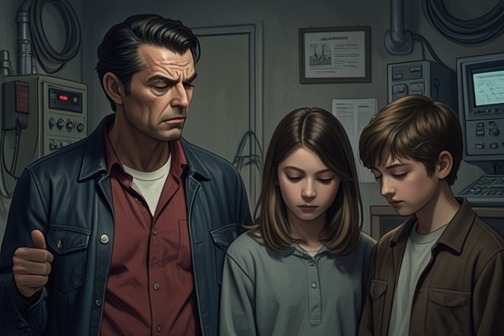
[The Cholon Lover’s Father’s Refusal of the Marriage](entity:event-recall-event-19f7caf9bc15) is the central prohibition that makes The Narrator’s affair with [The Lover from Cholon](entity:character-recall-character-376a7c365425) impossible as a lasting union. The father rejects the relationship without pity, and his decision joins racial hierarchy, family authority, wealth, and the impending departure for [France](entity:location-recall-location-4f282e1af8a7) into a single sentence of separation. The son is left with an attachment he cannot surrender, while The Narrator ultimately agrees to leave him, turning the refusal into both an external defeat and a painful act of consent.
## Causes and Social Conditions
The affair begins after The Lover from Cholon meets The Narrator while crossing the [Mekong River](entity:location-recall-location-5f434a9ee196). He belongs to the small group of financiers of Chinese origin who own working-class housing in the colony, and he travels between the Chinese commercial world and Saigon in a black car with a driver. The Narrator is fifteen and a half, a white girl living at a boarding school, and the relationship therefore carries the force of a colonial racial transgression as well as the imbalance between his wealth and her precarious family circumstances.
The relationship rapidly acquires a visible routine. He comes each day to collect her from the high school and drive her back to the boarding school; on a Thursday afternoon, during the weekly half-holiday, he takes her to his studio in [Cholon](entity:location-recall-location-9bafb013db9d). Their intimacy is established in a modern but darkly furnished room in a native housing estate. When he later drives her back, he stops just short of the school entrance so that no one will see him. The concealment does not remove the social danger. At the boarding school, Hélène Lagonelle is waiting anxiously, and the school has already telephoned about The Narrator’s absence.
The father’s opposition is rooted in a larger structure of authority. He is the richest and most formidable of the Chinese immigrants whose property extends from beyond [Sadec](entity:location-recall-location-8b3761b44c9f) to Cholon, the Chinese capital of French [Indochina](entity:location-recall-location-18b7d4135413). The son knows that his father will not permit the marriage, and The Narrator’s own refusal to remain with him reaches the same conclusion. Their decisions are described as irrevocable: the family’s power and the racial boundary separating a Chinese heir from a white girl leave no recognized future into which the affair can develop.
## The Son’s Plea and the Father’s Verdict
When the father becomes ill, The Lover from Cholon returns to Sadec, leaving the driver in Saigon to continue taking The Narrator to school and the boarding house. After several days he returns to the back seat of the black car, frightened and unable to face the people watching him. He and The Narrator kiss outside the school without speaking, and he weeps because his father is going to live. The father’s survival means that the last obstacle to his authority has not disappeared; it means that the son’s last hope of escaping his decision is disappearing.
The Lover from Cholon has asked his father to let him keep The Narrator close to him. He implores the older man to understand the passion, madness, and infatuation that have overtaken him, and asks for only a little more time—perhaps another year—before she is sent away to France. His appeal is not presented as a plan for overcoming the social order. It is a request for a temporary extension of love, made because the affair is still new, violent, and too powerful for him to relinquish. He also insists that the father must once have experienced passion himself, as though private memory might soften inherited authority.
The father’s answer is absolute: he would sooner see his son dead. The brevity of the verdict gives it its force. It does not argue against The Narrator’s character, nor does it negotiate a delay or propose an alternative arrangement. It establishes the father’s power over the son’s marriage and treats the relationship as a threat that can be answered only by repudiation. The refusal therefore operates simultaneously as a family command and as an enforcement of the [Chinese-white marriage taboo](entity:rule-recall-rule-05c1be0e60ca).
## The Narrator’s Decision and the Final Intimacy
After the refusal, The Narrator and The Lover from Cholon continue to bathe together with water from the jars, kiss, and weep. Their pleasure is already described as being unto death, but it has become inconsolable: intimacy no longer promises a shared future and instead registers the certainty of loss. The Narrator tells him not to have regrets and recalls his earlier wish to go away from everywhere, emphasizing that she is not responsible for what she does. She then agrees with his father and refuses to stay with him, without giving reasons.
Her agreement does not mean that the father has persuaded her morally or that the lovers have ceased to desire one another. It is a surrender to the same impasse from the opposite side. The father denies the marriage; The Narrator refuses to remain; The Lover from Cholon is caught between his passion and the authority that controls his future. The relationship’s emotional truth survives the decision, but its practical form has been destroyed.
The refusal also alters the meaning of The Narrator’s body and the lovers’ intimacy. The Lover from Cholon has come to see her thinness not as a defect but as a bodily kinship produced by Indochina’s heat, diet, clothing, and water. He calls her a girl of Indochina and recognizes in her the slender wrists, thick hair, and skin shaped by the tropical environment. This recognition briefly gives their connection a shared world, but the father’s decision returns them to the racial and familial categories that such recognition cannot overcome.
## Separation and Aftermath
Once the date of The Narrator’s departure is fixed, the separation begins to act upon The Lover from Cholon physically. They continue going every day to the flat in Cholon, but he can no longer make love to her. He says that his body wants nothing to do with the body that is about to go away and betray him, and he describes himself as dead. His gentleness remains even while his face quivers and his teeth clench; pain becomes the form through which his attachment continues after sexual potency has vanished.
They decide not to see each other again, but the decision proves impossible to keep. Every evening he waits outside the high school in the black car, his head turned away in humiliation. The pattern repeats the earlier secrecy of his visits, but now the car carries the knowledge that the affair has already been lost. Their continued meetings are not a recovery of the relationship; they are repetitions performed under the pressure of its ending.
The final separation occurs when The Narrator boards the ship. When the boat is due to sail, its three long blasts are heard throughout the town, and tugs draw it toward the middle of the river before releasing it. The ship sounds its farewell again as it moves slowly toward the sea, making not only the departing and their families but also onlookers and strangers weep. The Narrator cries without allowing her mother or younger brother to see, because he is Chinese and one ought not to weep for that kind of lover. The social prohibition therefore survives even at the moment when the lovers lose one another.
The black car is visible near the [Messageries Maritimes](entity:organization-recall-organization-messageries-mari-097c7be6c9a5) car park, separate from the official cars, with The Lover from Cholon motionless in the back. The Narrator leans on the rails as she had on the ferry at their first meeting, creating a structural return to the beginning of the affair. The Mekong crossing had opened a threshold into desire; the ship’s departure closes it through an irreversible voyage away from Indochina. The lovers remain separated, but the repeated images of the river, the car, and the watching body preserve the relationship as an image that outlasts its social possibility.
## Narrative Significance
The father’s refusal is not merely a private disagreement between generations. It demonstrates how desire is governed by property, lineage, race, and colonial social classification. The Lover from Cholon possesses wealth and mobility, yet he cannot convert those privileges into authority over his own marriage. The Narrator possesses the freedom to depart, but that freedom is also an expulsion from the world in which the affair occurred. Both lovers are constrained, though by different forms of power.
The event also gives the affair its tragic shape by refusing the expected romantic resolution. The son’s grand gesture is a plea rather than a successful act of rescue, and the father’s answer cannot be softened by the lovers’ mutual passion. The relationship moves from meeting on the Mekong, through secrecy and physical closeness, to a prohibition that makes departure inevitable. Its later emotional continuation is preserved not through reunion but through memory and narration.
Years after the war, after marriages, children, divorces, and books, The Lover from Cholon comes to [Paris](entity:location-recall-location-657453741ed3) with his wife and telephones The Narrator. She recognizes his voice immediately. He says that he only wanted to hear her voice, then tells her that he still loves her and will love her until death. The call does not undo the father’s refusal or restore the marriage that never took place. Instead, it confirms that the prohibition ended the shared life without ending the attachment. The marriage denied in youth becomes the absence around which the lovers’ enduring memory is organized.
Event 5
The Narrator’s Younger Brother’s Death
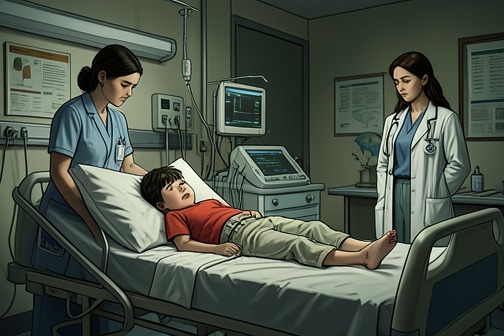
[The Narrator’s Younger Brother’s Death](entity:event-recall-event-fb7cad4ca4b8) is remembered not as an isolated family loss but as the catastrophe that reorganizes the Narrator’s entire inner world. He dies in [December 1942](entity:time-recall-time-1942-12-550f41dee6fd), during the Japanese occupation, after three days of bronchial pneumonia, when his heart gives out. The Narrator treats the death as an ending of childhood, a severing from her mother, and the beginning of a chain reaction in which everything must die after him and through him.
## Causes and Circumstances
The younger brother’s death occurs against the background of war, family poverty, and a long history of emotional violence. The Narrator had left Saigon after graduating from high school in [1931](entity:time-recall-time-1931-db5fd9cd1885) and had been separated from him for ten years. During that time he wrote to her only once. His letter was carefully copied, conventional, and reassuring: he reported that everyone was well, that the school was successful, that he had an apartment and a car, that he had resumed playing tennis, and that everything was fine. He did not mention the war or their elder brother. The ordinary confidence of the letter becomes devastating in retrospect because it preserves the appearance of life immediately before death.
The family had never possessed a language for mourning. There were no celebrations, no Christmas tree, no embroidered handkerchief, no flower, and no formal attention to deaths, funerals, or remembrance. Their mother spoke of her sons collectively, boasting of their physical strength and looking down on weakness; the Narrator later links the same contempt to the family’s attitude toward [The Lover from Cholon](entity:character-recall-character-376a7c365425). The younger brother’s death therefore enters a household already governed by silence, hierarchy, and unacknowledged suffering. It does not merely add grief to the family; it exposes the family’s inability to recognize or express grief.
## The Death and Immediate Rupture
The younger brother dies after three days of bronchial pneumonia. His heart gives out, and the event becomes the point at which the Narrator leaves her mother. She declares that her mother died for her on that day, and that her elder brother did as well: their moral and emotional existence ends with the younger brother’s death. The separation is not presented as a gradual disagreement or a considered decision. It is a violent internal break produced by horror, after which the Narrator no longer asks questions about her childhood or about her mother’s life.
The mother’s household is recalled through the image of Indian moneylenders sitting silently in the small parlor at [Sadec](entity:location-recall-location-8b3761b44c9f). They wear white dhotis, remain calm and smiling, and wait for months and years while the mother weeps and insults them from her room. The Narrator does not know how the debts were eventually paid, just as she cannot reconstruct the full practical circumstances surrounding the family’s collapse. The younger brother’s death thus remains inseparable from the failed land venture, financial ruin, maternal despair, and the family’s humiliating dependence on others.
The mother stays in Saigon from 1932 until [1949](entity:time-recall-time-1949-6b7a03fc6d42), saying that she must remain near the younger brother’s grave. Her immobility gives the death a geographical consequence: it fixes her to the colonial city even after the family’s life has otherwise become impossible there. Eventually she returns to [France](entity:location-recall-location-4f282e1af8a7), but reunion with the Narrator is already too late. The younger brother’s death has made the family’s separation permanent before the physical departure from [Indochina](entity:location-recall-location-18b7d4135413) is completed.
## Delayed News and Traumatic Revelation
The death returns later through the memory of a telegram from Saigon. The Narrator cannot remember its exact wording or whether it said that her younger brother was dead or that he had been recalled to God. This uncertainty does not lessen the event; it becomes part of its force. The telegram first produces incomprehension, then pain arriving from every direction, burying and carrying her away until she ceases to exist except as pain.
The Narrator distinguishes this grief from the earlier loss of a stillborn child. She had never known the stillborn child and had not wanted to kill herself then. The younger brother’s death awakens a different desire: the wish to die because of another person’s death. The loss is therefore not measured by recent contact or by the length of conscious remembrance. She had been parted from him for ten years and had hardly thought about him, yet discovers that she had loved him as though the love had existed forever.
The narration repeatedly circles the event rather than presenting it as a stable, completed fact. The telegram is partially forgotten; the wording is uncertain; the pain is difficult to name. This fragmentation makes the death feel delayed and recurrent. It is first experienced as news, then as a break with the family, then as a metaphysical outrage, and finally as material that can be written. The event is not mastered by being recounted once. It keeps returning in altered forms, each return revealing a different consequence.
## [Immortality](entity:state-recall-state-immortality-30ca2dae1a05) and the Chain of Death
The Narrator interprets the younger brother’s death as a cosmic error. She believes that immortality had been concealed in his living body and that nobody had noticed it. Once the body dies, immortality dies with it, while the world continues without the body and without the visitation it had carried. The outrage is described on the scale of God: the failure lies not only in the family’s blindness but in the universe’s failure to recognize what had been present.
From this insight comes the claim that everything had to die after the younger brother, and through him. Death becomes a chain reaction beginning with the child, although the corpse itself remains untouched by the events it has caused. The brother had harbored immortality for the twenty-seven years of his life without knowing its name. His death does not simply terminate a biography; it reveals the unstable condition of life itself, in which what seems mortal may contain an unrecognized absolute.
The Narrator calls his immortality flawless, pure, smooth, and unique. Yet the brother was not socially or intellectually celebrated. He was uneducated, struggled to learn, could scarcely speak, read, or write, and seemed at times not even to understand suffering. He was someone who did not understand and was afraid. The contrast is crucial: the immortality attributed to him does not arise from achievement, eloquence, or public importance. It resides in the irreducible singularity of a life that the family and the world failed to interpret while it was present.
The Narrator consequently rejects any simple idea of immortality as endless duration. Immortality belongs to life while it is being lived, and it may die with the living body that carries it. It does not announce itself, and it exists more as a principle than as a describable possession. The younger brother’s death supplies the experience through which this paradox becomes thinkable: [immortality is mortal](entity:expression-recall-expression-immortality-is-mor-e6c963f03cac) because its only dwelling is vulnerable life.
## Consequences and Narrative Significance
The death changes the Narrator’s relationship to her mother from troubled attachment to abandonment. She says that after the event her mother and brothers no longer mean anything to her, and that she cannot recover the scent of her mother’s skin, the color of her eyes, her laughter, or her cries. Yet this emotional erasure also makes writing possible. Once the mother has become something that can be written without difficulty, the family’s formerly unmanageable history can be rendered at length. Forgetting and narration become strangely connected: emotional distance permits testimony.
The younger brother’s absence also shadows later scenes of departure and separation. On the voyage away from Indochina, the Narrator recalls a seventeen-year-old passenger from Sadec who throws himself into the sea, and music nearly drives her to repeat the gesture. She thinks of The Lover from Cholon and recognizes that her love for him may have been obscured within the affair, only becoming visible through the shock of death. The brother’s death therefore enlarges the emotional meaning of later departures: every farewell is haunted by the possibility that separation is already a form of death.
The event remains active even after the family has dispersed and died. The Narrator’s later writing does not restore the brother to ordinary memory; it gives his death a structure of recurrence, silence, and metaphysical disturbance. His conventional letter, the uncertain telegram, the pain that arrives belatedly, and the declaration that death began with him form a sequence in which private bereavement becomes a theory of existence. The younger brother is remembered as both an almost inarticulate child and the bearer of an absolute that the living recognized only too late.
Event 6
The Mother’s Death
[The Mother’s Death](entity:event-recall-event-913bb6a793a3) is not presented as a single isolated moment but as the culmination of a family history shaped by poverty, colonial displacement, violence, debt, and maternal despair. By the time The Mother dies, [Paulo](entity:character-recall-character-paulo-73d2010be7d9) and [The Elder Brother](entity:character-recall-character-38d3046bbfb6) have already become, in different ways, the decisive losses around which her life has been organized. Her death therefore ends not only her physical life but the family system that bound the Narrator to fear, loyalty, shame, and responsibility.
## Causes and Family Background
The Mother’s final collapse is rooted in the destruction of her plans for her children. She insists that The Narrator attend high school and pursue a degree in mathematics, while repeatedly attempting to educate Paulo through the [Universal Correspondence School](entity:organization-recall-organization-universal-corres-edb871e9f964). The family’s movements interrupt those courses, and Paulo eventually becomes an accountant’s clerk in Saigon. The Elder Brother is sent to [France](entity:location-recall-location-4f282e1af8a7) to study at a technical school, partly because there is no technical school in the colonies and partly because removing him from the other children is necessary for their survival. The Mother’s purchase of land by the dike becomes a disastrous financial undertaking, adding debt and disappointment to an already unstable household.
Her children experience her despair as a permanent atmosphere rather than as a temporary illness. The Narrator remembers wanting to kill The Elder Brother, both to punish The Mother for loving him and to protect Paulo from the terror imposed by his older brother. The family’s violence is recurrent: The Elder Brother attacks Paulo without explanation, the brothers fight in silence, and The Mother accompanies their clashes with screams. The household is united by blood but divided by fear, and its members share what the Narrator calls a fundamental shame at having to live. The Mother’s inability to conceal her despair leaves all three children emotionally marked, even though they love her intensely.
The death of Paulo is the first decisive break. He dies in three days of bronchial pneumonia after his heart gives out, during the Japanese occupation. The Narrator leaves The Mother on that day and later says that The Mother and The Elder Brother also died for her, emotionally, through Paulo’s death. The loss makes The Mother’s continuing life increasingly inseparable from grief, debt, and her compulsive protection of The Elder Brother.
## The Mother’s Later Life and Decline
After Paulo’s death in [December 1942](entity:time-recall-time-1942-12-550f41dee6fd), The Mother remains in Saigon until [1949](entity:time-recall-time-1949-6b7a03fc6d42), saying that she must stay near his grave. She eventually returns to France, but reunion with the Narrator is already impossible. The Narrator’s son is two years old when they meet again, and both recognize immediately that there is nothing left to restore between them. The Mother settles in [Loir-et-Cher](entity:location-recall-location-452825cef576), in a sham Louis XIV chateau, living with [Dô](entity:character-recall-character-d-1ca67f88506e) while continuing to organize her resources around The Elder Brother.
Her attempts to secure The Elder Brother’s future become increasingly destructive. She buys him a property near [Amboise](entity:location-recall-location-22a5ab461774) with woods, but he cuts down the woods and gambles away the proceeds in a baccarat club in [Paris](entity:location-recall-location-657453741ed3) in a single night. He is later found lying in his car in [Montparnasse](entity:location-recall-location-40d7d0616265), outside the Coupole, wanting to die. The Mother then turns the chateau itself into another desperate enterprise, installing electric incubators in the drawing room. Six hundred chicks hatch, but an error with the infrared rays leaves them unable to eat; they starve, and The Mother abandons the undertaking. The Narrator remembers the rejoicing during the hatching and the intolerable stench of the dead chicks afterward, a grotesque image of care transformed into mass failure.
The Mother’s madness becomes unmistakable in the Loire house. She is not described as briefly overtaken by illness but as having lived with madness as though it were her natural condition, supported by Dô and The Elder Brother. She remains socially lively, intelligent, cheerful, and poised, surrounded by long-standing friends and younger acquaintances, including former colonial officials in Touraine. This public sociability coexists with private terror. During her last winters she places five or six sheep around her bed during heavy frosts and buys a gun because she is still afraid at night.
The Narrator has long feared the moment when The Mother’s condition would worsen enough to require separation from her children. The fear is bound to a childhood memory of madness as contagion: at about eight years old, the Narrator is chased through a dark avenue in [Vinh Long](entity:location-recall-location-3c53f104f710) by a laughing local madwoman and becomes certain that being touched would carry her into a state worse than death. Much later, on the terrace of the house in the rue Testard, The Narrator looks at The Mother and suddenly cannot recognize her. A beautiful, apparently youthful stranger seems to occupy the place where The Mother had been. The Narrator cries out, understanding that an irreplaceable identity has disappeared while remaining physically present.
## The Death and Burial
The Mother dies in the large first-floor bedroom of her final house on the Loire. She dies between Dô and the son she called her child, The Elder Brother. The setting gathers the contradictions of her life: the bedroom is large, but it had also served during severe frosts as a place where she put sheep to sleep; the woman who had devoted herself to preserving her son’s existence dies within the domestic world that her care and desperation had made strange.
The death is remembered retrospectively and without full emotional possession. The Narrator says that all three are dead—The Mother, The Elder Brother, and Paulo—and that it has become too late even for memories. The Narrator can no longer recall the scent of The Mother’s skin, the color of her eyes, her ordinary voice, her laughter, or her cries. This loss of sensory memory is also a form of release: once The Mother is dead, she becomes someone the Narrator can write about easily, fully, and at length. The living obstacle of family silence has become a literary object.
The Mother asks to be buried with The Elder Brother. The Narrator does not know the cemetery, only that the grave is in the Loire and contains the two of them together. The burial joins the mother to the child for whom she sacrificed property, money, reputation, and much of her remaining life. It also gives material form to the family’s distorted hierarchy: The Elder Brother, who had stolen from her and endangered the others, remains the son beside whom she chooses to lie.
## Consequences for The Elder Brother and the Narrator
The Elder Brother’s conduct after The Mother’s death exposes the economic and moral damage of the bond between them. During the upheaval surrounding her death, he immediately summons a lawyer and relies on a will that excessively favors him. The lawyer declares the will invalid, but The Narrator accepts the unequal inheritance and signs. The Elder Brother lowers his eyes, thanks her, and weeps sincerely in the midst of the funeral emotion. Even at the moment when the maternal structure disappears, their relationship remains governed by exploitation, shame, and an unwilling remnant of attachment.
The Mother had concealed The Elder Brother’s crimes as though being his mother were itself a crime. She never spoke openly about his thefts, his gambling, or his predatory behavior, repeating instead that he could have been the cleverest, most artistic, or most astute of the three, and that he had loved and understood her best. Her silence protects him while isolating her from everyone who might otherwise recognize the family’s reality. After her death, he loses the only empire he possessed: the family circle that feared him, financed him, and continued to receive him.
The Elder Brother then descends into abandonment. He has no lasting friends, loses both houses, lives for a year in a furniture warehouse, and sleeps in an armchair until he is expelled. He gambles away The Mother’s stored furniture piece by piece, including bronze Buddhas, brasses, beds, wardrobes, and sheets. Eventually he has only the clothes he is wearing and no shelter. After writing to a cousin in Paris, he obtains a servant’s room on boulevard Malesherbes and, for the first time after the age of fifty, takes a job as a messenger for a marine insurance company. He works for about fifteen years, later enters a hospital, and dies in his room rather than in the hospital.
The Narrator treats The Elder Brother’s later death as secondary to Paulo’s. A telephone call reports that he has been found dead on the floor of his room, but the Narrator insists that his death came after the end of his story. For her, the decisive ending had already occurred with Paulo’s death. The phrase “[It is finished](entity:expression-recall-expression-it-is-finished-3afca533351b)” therefore marks not merely biological death but the earlier destruction of the family order and the emotional world it imposed.
## Narrative Significance
The Mother’s Death reorganizes the Narrator’s relation to the past. While The Mother and the brothers are alive, the Narrator writes around them, skirting the family’s central truths without confronting them. Once they are dead, distance makes sustained writing possible. The Mother is no longer an immediate demand, a source of fear, or a witness who might be wounded by disclosure; she becomes material that can be shaped into prose.
The event also reveals the paradox of maternal love in the family. The Mother’s devotion is genuine, but it is expressed through unequal protection, failed economic schemes, silence about abuse, and an inability to separate The Elder Brother from the younger children. Her care preserves life while helping preserve the structure that makes life intolerable. The Narrator’s departure after Paulo’s death and the later emotional separation from The Mother show that survival requires a break with this closed system, even though the break is achieved through bereavement rather than resolution.
The final burial with The Elder Brother offers no reconciliation in the ordinary sense. It creates an image of permanent attachment that is both terrible and magnificent: The Mother remains beside the son who consumed her resources and helped deform the family. The Narrator can no longer love them in the old way, and may not know whether that love ever existed apart from obligation and shared suffering. Yet the very act of writing The Mother’s death keeps the lost family present, transforming irreversible separation into an enduring literary form.
Event 7
The Narrator’s Elder Brother’s Death
[The Narrator’s Elder Brother’s Death](entity:event-recall-event-652b6cf2e28f) is the terminal event in a life defined by violence and isolation, but the narrative treats the death as belated: when the telephone announces that he has been found dead, his real ending has already occurred in the family’s collapse and in [Paulo](entity:character-recall-character-paulo-73d2010be7d9)’s death. [The Elder Brother](entity:character-recall-character-38d3046bbfb6)’s physical disappearance therefore confirms a moral and emotional sentence that the Narrator has long understood as already complete.
## Family System and the Making of the Threat
The Elder Brother occupies the most dangerous position in the family. As children, he repeatedly attacks Paulo for being in the way, and the brothers fight in silence, with only breathing, groans, blows, and the Mother’s shrieks breaking the air. The Narrator describes the Elder Brother’s violence as an appetite for mastery: he wants to do evil freely, to rule over it everywhere, while Paulo is tormented by having to witness what he is. Their conflict is not presented as a series of isolated quarrels but as the family’s governing structure, in which the Elder Brother becomes the source of fear and the other children become its witnesses and casualties.
The Narrator’s own response to this structure is murderous fantasy. At night, when fear of death and of God becomes strongest, the Narrator wants to kill the Elder Brother, defeat him once, and remove from the Mother’s sight the son who monopolizes her love. The imagined killing also appears as an attempt to save Paulo from the Elder Brother’s presence, described as a black veil over his life and as an animal law that fills every day with fear. The Elder Brother’s eventual death thus answers a desire that has existed long before the reported event, although the narrative never turns that desire into an actual act by the Narrator.
The family’s silence intensifies the Elder Brother’s power. There are no greetings, thanks, celebrations, or ordinary conversation; the members do not look at one another, and the Narrator presents the household as petrified by shared shame. The Mother’s despair binds the three children together even as it damages them. The Elder Brother is both the favored son and the agent of terror, while the younger children are drawn into a closed system of loyalty, fear, and resentment. When the Mother beats the Narrator after suspecting the affair with [The Lover from Cholon](entity:character-recall-character-376a7c365425), the Elder Brother answers in a lowered, coaxing voice that she is right to punish the girl and that the truth must be extracted. His apparent concern for saving the Narrator and the Mother conceals, or at least accompanies, a wish for the punishment to continue toward harm.
## Life After the Mother’s Death
After the Mother dies, the Elder Brother loses the family environment that had given his violence its reach. The Narrator describes him as having no friends and as living among women and men connected with paid sexual relationships, but without loyalty, grandeur, or real power. He is not portrayed as a public gangster; he is a small-scale family predator, a rummager in closets, a murderer without a gun, and a man whose influence extends only through the immediate circle that fears him. Once the family is gone, the empire he possessed is revealed to have been only the family itself.
His material decline follows this emotional isolation. In [Tours](entity:location-recall-location-235c1c3b83e0), he has nothing after both houses have been sold. For a year he sleeps in an armchair in a furniture warehouse leased by the Mother, until he is expelled. He gambles away her stored belongings piece by piece: bronze Buddhas and brasses first, then beds, wardrobes, and sheets. The sequence reduces an entire household to separate objects and finally leaves him with only the suit on his back, no shelter, and no one willing to open a door to him for a year.
A cousin eventually gives him a servant’s room on boulevard Malesherbes. There, after the age of fifty, he takes his first job and receives his first wages, working as a messenger for a marine insurance company. The work lasts about fifteen years, until he has to enter hospital. He does not die there. Instead, he dies in his room, after an existence that has contracted from family domination to poverty, drink, and solitude. His decline supplies the concrete aftermath of the family’s dissolution: without the household to command or exploit, his power becomes mere survival.
## The Reported Death and Its Meaning
The death itself is deliberately spare. On a dreary day, probably in April, someone telephones and says only that the Elder Brother has been found dead on the floor of his room. No cause is supplied, and the narrative does not dramatize a final confrontation, confession, or reconciliation. The absence of explanation preserves the event’s starkness: the man who once organized the family’s fear ends alone, discovered in a private room, beyond the reach of the conflicts through which he had defined himself.
The Narrator immediately refuses to let the telephone report function as the true beginning of the ending. Death, the Narrator says, came before the end of his story. While he was still alive, it had already happened; everything had been over since Paulo’s death. The phrase “[It is finished](entity:expression-recall-expression-it-is-finished-3afca533351b)” converts Paulo’s death into the decisive prior event and makes the Elder Brother’s later death a confirmation rather than a climax. This temporal displacement is central to the event’s force. The body dies in April, but the family role, the violent authority, and the possibility of meaningful continuation have already perished.
The Mother’s final arrangement gives the death an unexpected afterimage. She had asked to be buried with the Elder Brother, though the Narrator does not know which cemetery in the Loire. They are placed in the same grave, the two of them together. The image is described as one of intolerable splendor: the Mother who concealed her son’s crimes and treated being his mother as if it were a crime is reunited with the child whose violence helped produce the family’s common fate. The shared grave does not redeem him or resolve the family’s history; it preserves the disturbing intimacy between maternal attachment, shame, and complicity.
## Narrative Function and Afterlife
The event is recalled through the Narrator’s retrospective reconstruction rather than presented as a complete public record. Earlier, the Narrator admits having written around the family while the Mother and brothers were alive, avoiding a direct attack on what had happened. The Elder Brother’s death makes fuller speech possible, but the account remains marked by uncertainty: the season is remembered as spring, the month as probably April, and the circumstances of discovery are limited to a brief telephone message. Such gaps do not weaken the event’s significance. They show how the story is approached through belated knowledge, repeated returns, and the difficulty of naming family violence.
The death also gathers together the book’s recurring threshold images. The Narrator’s life moves through crossings, departures, boarding-school boundaries, and the later return of the former lover’s voice from [Paris](entity:location-recall-location-657453741ed3), while the Elder Brother’s trajectory moves in the opposite direction—from control of the household toward confinement in rooms, warehouses, and finally the room where he dies. The family’s earlier physical enclosure becomes his post-Mother solitude. His death therefore closes not only a biography but a structure: the feared figure remains at the center of the Narrator’s memory, yet outside the family he possesses nothing that can continue.
In the finished narrative, the Elder Brother’s death is both fact and verdict. It confirms that the man who seemed to hold power over everyone was ultimately sustained by their forced proximity, their fear, and the Mother’s inability to conceal or escape her despair. Once Paulo is dead and the family has dispersed, the Elder Brother is already finished in the Narrator’s deepest sense. His burial beside the Mother leaves the final image not of forgiveness, but of an inseparable bond whose violence survives as memory, silence, and writing.
Event 8
The Cholon Lover’s Telephone Call from Paris

[The Cholon Lover’s Telephone Call from Paris](entity:event-recall-event-25335f951f5c) is the belated reunion between the Narrator and the Chinese man from [Cholon](entity:location-recall-location-9bafb013db9d) whose love affair defined one of the decisive passages of her youth. Its significance lies in its smallness: after the ferry crossing, the black car, the Cholon apartment, the forced separation, and the departure by ship, the relationship returns through nothing more than a telephone line. Yet the call confirms that the past has remained emotionally active for both of them, even while their lives have acquired the conventional forms of marriage, family, and public success.
## Background and Separation
The affair begins when the Narrator is fifteen and a half, crossing the [Mekong River](entity:location-recall-location-5f434a9ee196) on a ferry. The image of that crossing lasts across the river and becomes the threshold of the relationship: she is still a schoolgirl from a poor and troubled family, while he is a Chinese financier from the small group of men of Chinese origin who own the colony’s working-class housing. He is travelling toward Saigon, and the meeting immediately binds desire to social difference, racial taboo, money, and the colonial geography separating the Chinese quarter from the French center.
The relationship quickly acquires a repeated public pattern. On the weekly half-holiday, he comes to the boarding school in his black car and drives her to his modern, hastily furnished studio in Cholon. He then returns her at night, stopping short of the entrance so that no one will see him. She runs inside without looking back, while Hélène Lagonelle waits in the illuminated playground and asks where she has been. The secrecy is not incidental: the Narrator is one of only two white girls in a state boarding school filled largely with half-caste girls and pupils abandoned by colonial officials, and the affair crosses the racial and class boundaries governing their world.
## The Call in [Paris](entity:location-recall-location-657453741ed3)
Years after the war, after marriages, children, divorces, and books, the Lover comes to Paris with his wife and telephones the Narrator. He identifies himself with the simple words, “It’s me.” She recognizes him immediately from his voice. He says that he only wanted to hear her voice, and his nervousness and fear return as they had before. The trembling voice brings back, for her, the voice of [China](entity:location-recall-location-134e6ca3a450): the call does not merely transmit information but restores the sensory and emotional presence of the lost relationship.
The timing of the call gives it a double meaning. The Lover knows that the Narrator has begun writing books, information he learned through her mother, whom he encountered again in Saigon. He also knows about her younger brother and has been grieved by what happened to her family. The telephone therefore joins the private past to the Narrator’s later identity as a writer and to the losses that have marked her adulthood. He reaches her not at the beginning of a romance but after history, family catastrophe, and literary transformation have already intervened.
## What the Lover Reveals
At first he does not know what to say. Then he tells her that everything is as before: he still loves her, has never been able to stop loving her, and will love her until death. The declaration changes the meaning of the earlier separation. Their relationship had seemed to end when the Narrator left [Indochina](entity:location-recall-location-18b7d4135413), and the Lover’s father later ordered him to marry a Chinese girl chosen by the families, a sixteen-year-old from [Fushun](entity:location-recall-location-17eb66fb08c5) covered in gold, diamonds, and jade. The marriage fulfilled the expectations of the families and secured the continuation of their fortune, but it did not erase the white girl from his emotional life.
The narrative presents his later marriage as an act shaped by duty and displacement rather than as a simple replacement of the Narrator. The Lover may have had to recover desire through the memory of the white girl while fulfilling the demand to produce an heir for his family. The Narrator never knows what passed between him and his bride, and the account remains speculative at that point. The Paris call, however, removes the central uncertainty: whatever happened within the arranged marriage, he tells the Narrator directly that his love survived it.
## The Telephone as a Threshold
The call repeats the book’s recurring structure of departure and return. The first threshold is the ferry crossing on the Mekong; the next is the entry into the Cholon apartment, where the Narrator becomes aware that desire has already begun; the later thresholds include her secret return to the boarding school and the ship’s departure from Indochina. When the boat gives its long, terrible blasts and is towed toward the middle of the river, the sound makes those parting and merely watching weep. The Narrator cries without allowing her mother or younger brother to see, because he is Chinese and she believes one ought not to weep for such a lover.
The Paris telephone call reverses the direction of that movement without undoing its consequences. The lovers do not reunite physically, and the call does not restore their shared life. Instead, the voice crosses the distance that the boat once opened. The reunion remains mediated, belated, and incomplete, but that incompleteness is precisely its force: the relationship can return only as memory voiced across separation.
## Consequences and Narrative Significance
The call confirms that the affair is not a youthful episode whose meaning has been exhausted by time. It survives in the Lover’s voice, in the Narrator’s recognition, and in his knowledge of her writing. His statement that he will love her until death gives the encounter the shape of a final vow, while also placing love beside mortality rather than promising a conventional happy ending. The relationship receives no domestic future; it receives acknowledgment.
As a narrative event, the call gathers earlier motifs into one compressed scene. The black car and the ferry had made movement visible; the telephone makes distance audible. The Lover once waited outside the high school in humiliation after their decision to stop seeing each other proved impossible, and he later watched the departing Narrator from his car near the [Messageries Maritimes](entity:organization-recall-organization-messageries-mari-097c7be6c9a5) car park. In Paris, he again approaches her indirectly, with fear and hesitation, but this time the approach is not interrupted by family authority or the physical departure of a ship. His voice becomes the surviving form of the affair, carrying love across decades and allowing the past to speak once more without pretending that it can be lived again.